
Choosing the Right arena footing for Your Equestrian Facility
Choosing the right arena footing is one of the most important decisions for horse owners and facility managers. The footing you select directly affects your horse’s performance, safety, maintenance costs, and long-term durability of your arena.
In this guide, we’ll break down the most common arena footing materials, explain how popular arena footing additives work, and help you understand how to choose the best solution for your specific needs.
What Is Arena Footing?
Arena footing refers to the top riding surface in a horse arena, the material horses travel on during training, competition, or exercise. Ideal footing provides:
Consistent traction
Proper shock absorption
Good drainage
Minimal dust
Long-term durability
The best footing balance depends on climate, discipline, and maintenance practices.
Common Arena Footing Components
Most horse arena surfaces are built using a combination of:
Base layer (stone or compacted material for drainage and stability)
Top footing layer (sand or other primary material)
Additives (fiber, rubber, wood, or chemical stabilizers)
Your geographical region often determines which materials are available and cost-effective. Common footing materials include:
Sand
Wood products
Stonedust
Rubber
Sand: The Foundation of Arena Footing
Sand is the most widely used arena footing material and for good reason. It’s affordable, readily available, and highly versatile.
Advantages of Sand Footing
Cost-effective and accessible
Works as a standalone footing or base for additives
Provides good drainage
Challenges
Dries quickly and becomes dusty
Can requires regular watering
Can become unstable depending on composition
Key Sand Characteristics
Understanding sand composition is essential for optimal performance:
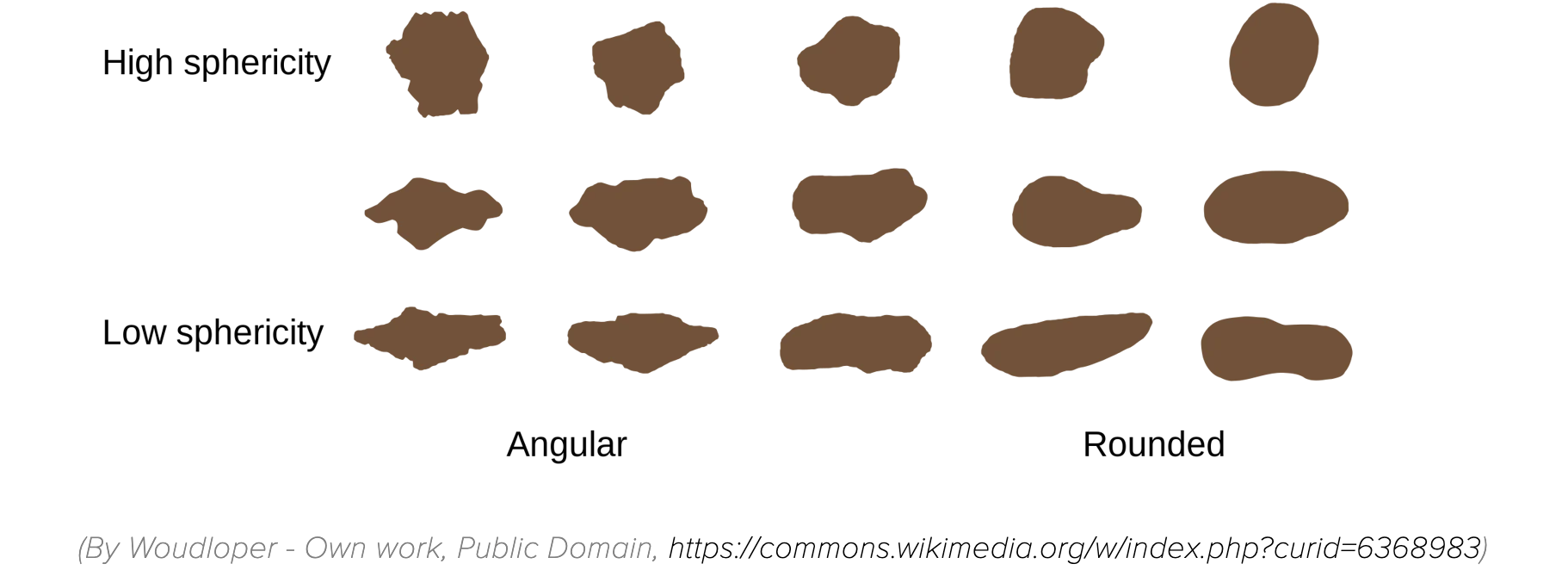
1. Sphericity
Rounded sand particles move easily
Too round = unstable, shifting surface
2. Angularity
Angular grains interlock for better stability
Higher angularity reduces “shiftiness”
3. Grain Size Distribution
Coarse sand drains well but may not bind
Fine particles (silt/clay) can cause compaction and dust
A sieve analysis is the best way to determine whether your sand has the right balance for arena footing.
Need to evaluate your arena sand and get some guidance? Reach out to us to get a Sand Analysis
Key tip: Sand labeled the same name may differ significantly by region—always verify composition before purchasing.
Organic & Wood Products: Natural Cushioning
Wood footing—including chips and coarse sawdust—can be used alone or mixed with sand.
Benefits
Provides excellent cushioning
Helps retain moisture
More affordable than some alternatives
Downsides
Breaks down quickly and needs replacement
Availability varies by region
Safety note: Avoid walnut and black cherry wood, as they are toxic to horses. Always source from trusted manufacturers specializing in horse arena footing.
Stonedust: Stable but Maintenance-Heavy
Stonedust includes:
Decomposed granite
Limestone screenings
Bluestone
White stone
Benefits
Low cost
Stable and firm surface
Good drainage properties
Challenges
Requires careful maintenance
Dries out and becomes hard
Needs frequent watering
Stonedust performs best when combined with additives like rubber to reduce compaction and improve cushioning.
Textile & Fiber Additives: Stability and Performance
Fiber and felt additives are commonly mixed with sand to enhance footing stability.
How They Work
Fibers act like a binding agent:
Sand particles cling to fibers
Creates a more structured, stable surface
Benefits
Improved traction and consistency
Reduced surface movement
Ideal for performance disciplines
Considerations
Can become too compact over time
Increased concussion risk if not maintained
Often made from synthetic or recycled materials (environmental concerns)
Rubber Additives: Cushion and Elasticity
Rubber footing additives are popular for improving shock absorption and reducing compaction.
Benefits
Excellent cushioning for hooves
Helps footing “bounce back”
Reduces compaction in sand or stonedust
Retain Water (Only with open-cell)
Types of Rubber
1. Open-Cell Rubber - ReitenRight Footing
Retains moisture
Stays flexible in cold climates
Adds cushioning
Relieves Packing
2. Closed-Cell Rubber
Tends to float and separate
More affected by weather
3. EVA Foam
Lightweight, cushioning material
May lack consistency depending on source
4. Crumb (Tire) Rubber
Lower cost
Can migrate out of footing
May freeze in cold weather
Potential environmental and health concerns
Always ensure rubber additives are free from contaminants like metal fragments.
Organic Dust Control: Magnesium Chloride
Magnesium chloride is a common dust-control additive.
Benefits
Reduces airborne dust
Helps retain moisture
Limitations
Washes away with rain
Best suited for indoor or dry climates
Not a solution for poor-quality or worn-out sand
How to Choose the Right Arena Footing
Selecting the best horse arena footing depends on several factors:
1. Climate
Dry regions: prioritize dust control (fiber, open-cell rubber, magnesium chloride)
Cold climates: avoid materials that freeze (rubber)
2. Discipline
High-performance riding: fiber and rubber blends for stability and cushion
General riding: sand with moderate additives
3. Maintenance Capacity
Low maintenance: invest in high-quality sand + additives (rubber is the best low maintenance additive)
High maintenance: basic sand may suffice
4. Budget
Sand: most affordable base option
Additives: increase upfront cost but reduce long-term issues
Final Thoughts: Building the Ideal Arena Surface
The best arena footing isn’t just one material, it’s a carefully balanced system.
Most successful arenas combine:
High-quality arena sand
The right additives (fiber, rubber, or wood)
Consistent maintenance practices
Before committing, consider testing materials or requesting samples. A properly designed footing system improves horse safety, performance, and longevity of your arena investment.
Key Takeaways
Sand is the foundation of most arena footing systems
Additives enhance performance by improving stability, moisture retention, and cushioning
Material choice depends heavily on location and use
Proper analysis and maintenance are critical to long-term success