
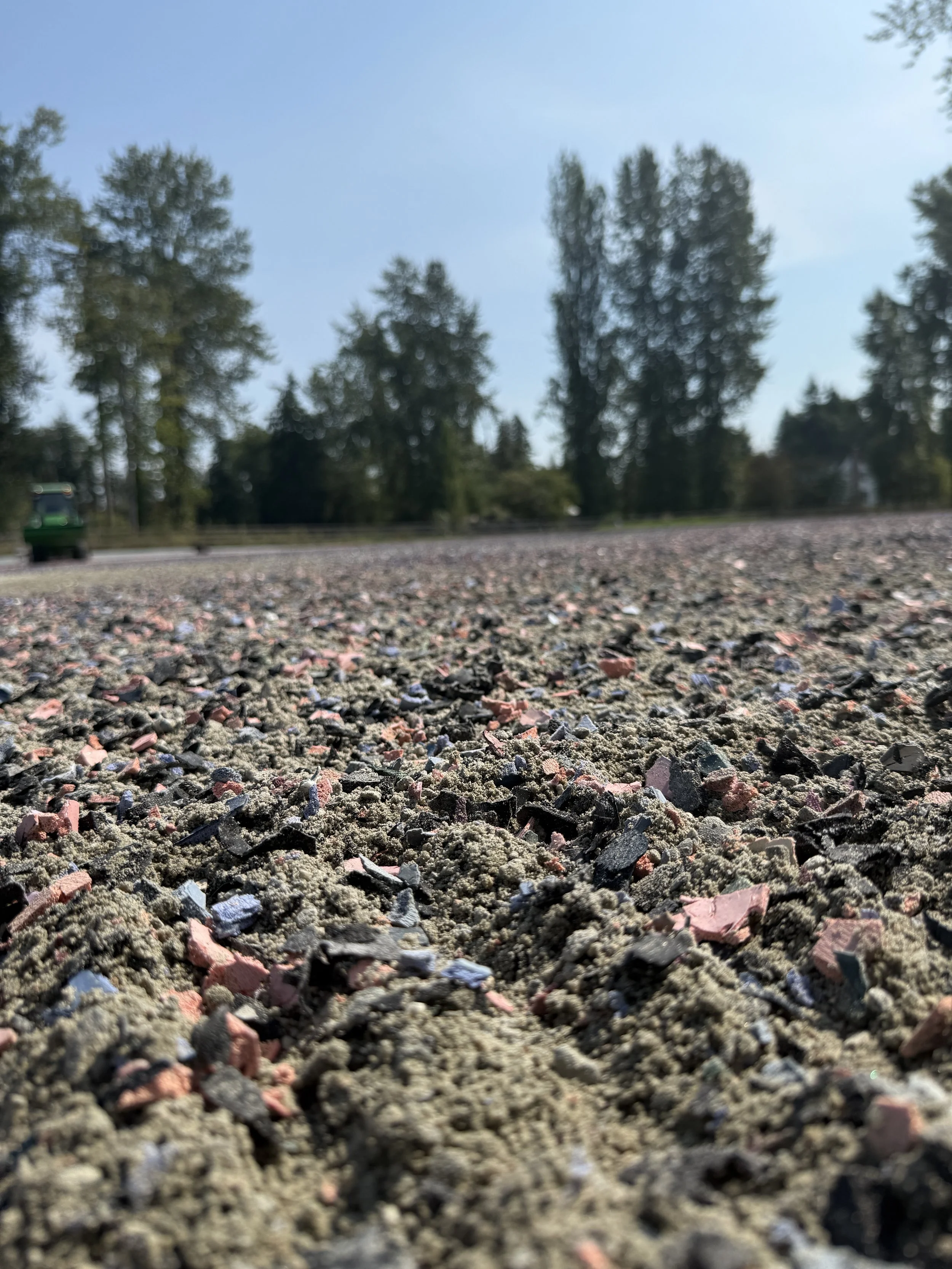
How to Build a Solid Foundation for Safe, Consistent Footing
When planning a new riding arena, it’s easy to focus on the footing, the surface your horse rides on every day. But before any footing is installed, the arena base must be built correctly. A well-constructed base is the foundation of a safe, consistent, and long‑lasting riding surface. Cutting corners at this stage can lead to costly repairs, uneven footing, and potential soundness issues for horses.
Work With an Experienced Arena Contractor
One of the most important decisions you’ll make is choosing the right contractor. Not all excavation or construction professionals understand the unique demands of a horse arena. Ideally, your contractor should have direct arena experience and take the time to understand how the space will be used.
A knowledgeable contractor will:
Build directly on properly prepared native material
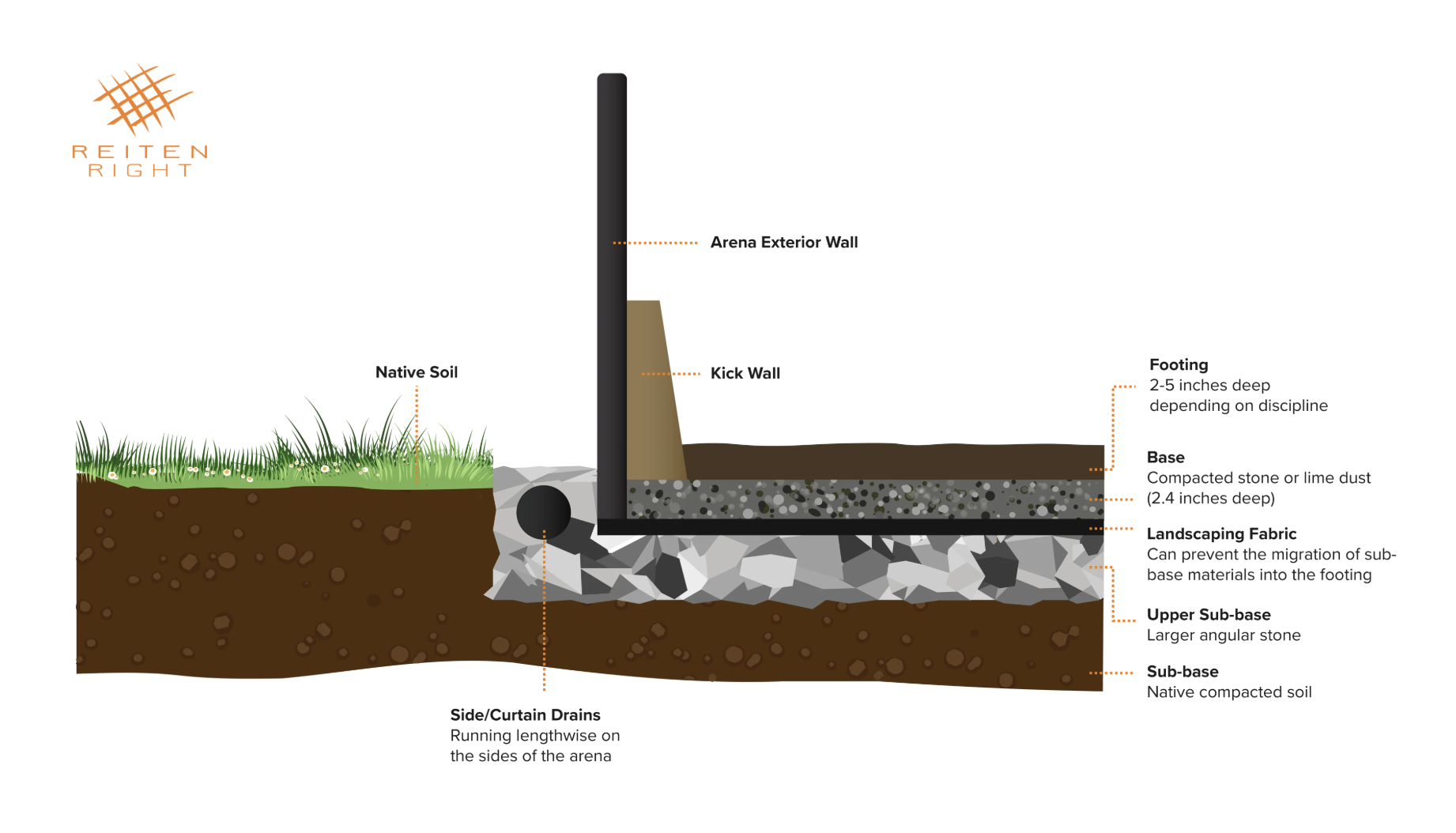
Install layered stone or lime dust sub‑bases
Compact each layer thoroughly to prevent breakdown
Design the base to support footing performance while allowing for drainage
Local knowledge is especially valuable. Soil conditions, climate, and material availability all influence how deep the site should be excavated and which materials will perform best. While it’s important not to skimp on materials, trucking costs can rise quickly when moving multiple tons of stone and an experienced contractor can help strike the right balance.
Why the Base Matters So Much
Fixing a poorly built base is expensive. In most cases, the footing must be completely removed to correct base issues, dramatically increasing both cost and downtime.

The base is the literal and figurative foundation of your arena. A solid base allows footing materials to perform as intended. If the base is soft, unstable, or begins to migrate upward into the footing, the riding surface becomes inconsistent and unsafe.
The ideal arena base is:
Hard and well compacted
Uniform across the entire arena
Durable enough to resist breakdown over time
When the base is inconsistent, horses are forced to compensate as the surface reacts unpredictably beneath them. This can affect balance, confidence, and long‑term soundness. A properly built base ensures that horses experience the same ride quality in every part of the arena.
Drainage: One of the Biggest Arena Challenges
Poor drainage is one of the most common and frustrating problems arena owners face. Beyond increasing maintenance, inadequate drainage leads to uneven footing, flooding, and safety concerns for both horses and riders.
Arena Location Matters
Whenever possible, an arena should be built on higher ground. Elevation allows water to drain naturally away from the riding surface rather than pooling underneath it.
Choosing the Right Slope
Proper slope is essential for directing water away from the arena:
A slight crown (about 1–1.5° sloping from the center outward) is a common and effective solution
A consistent slope in one direction (typically lengthwise) can also achieve good runoff
Both approaches prevent standing water and protect the integrity of the base and footing.
Managing Water in Challenging Conditions
In areas with high water tables or poorly draining native soil, additional drainage solutions may be necessary, including:
French drains or perimeter drainage systems
Side curtains to carry runoff away from the arena
Sub‑footing drains installed beneath the base
Geotextile fabric is often used in these situations to prevent fine materials from leaching into drainage systems. While this adds upfront cost, it significantly reduces the risk of long‑term flooding and structural failure.
Precision Leveling Is Non‑Negotiable
Once the base layers are installed, final leveling is critical. Your contractor should use proper equipment to ensure the base is perfectly level and set to the correct slope or crown before any footing is added.
Skipping or rushing this step can result in:
Uneven footing depth
Water pooling
The need to remove and reinstall footing later
Getting the base right from the beginning prevents costly corrections down the road.
The Relationship Between Base and Footing
Footing is the most visible and most talked‑about component of a riding arena, and for good reason. Proper footing plays a major role in the long‑term soundness and performance of horses, riders, and trainers.
However, even the best footing materials can only perform well when supported by a solid base. When base, drainage, and footing are designed to work together, arena owners benefit from:
Consistent ride quality
Reduced maintenance demands
Improved longevity of footing materials
Choosing the right footing depends on many factors, including material availability, cushion, grip, drainage, durability, and environmental impact. The right combination leads to years of healthy, high‑performance riding.
Build It Right the First Time
A good horse arena base isn’t glamorous but it’s essential. Investing time, expertise, and resources into proper base construction pays off through safer footing, fewer problems, and a better experience for both horse and rider.
When the base is built correctly, the footing can truly shine and your arena will perform as it should for years to come.