
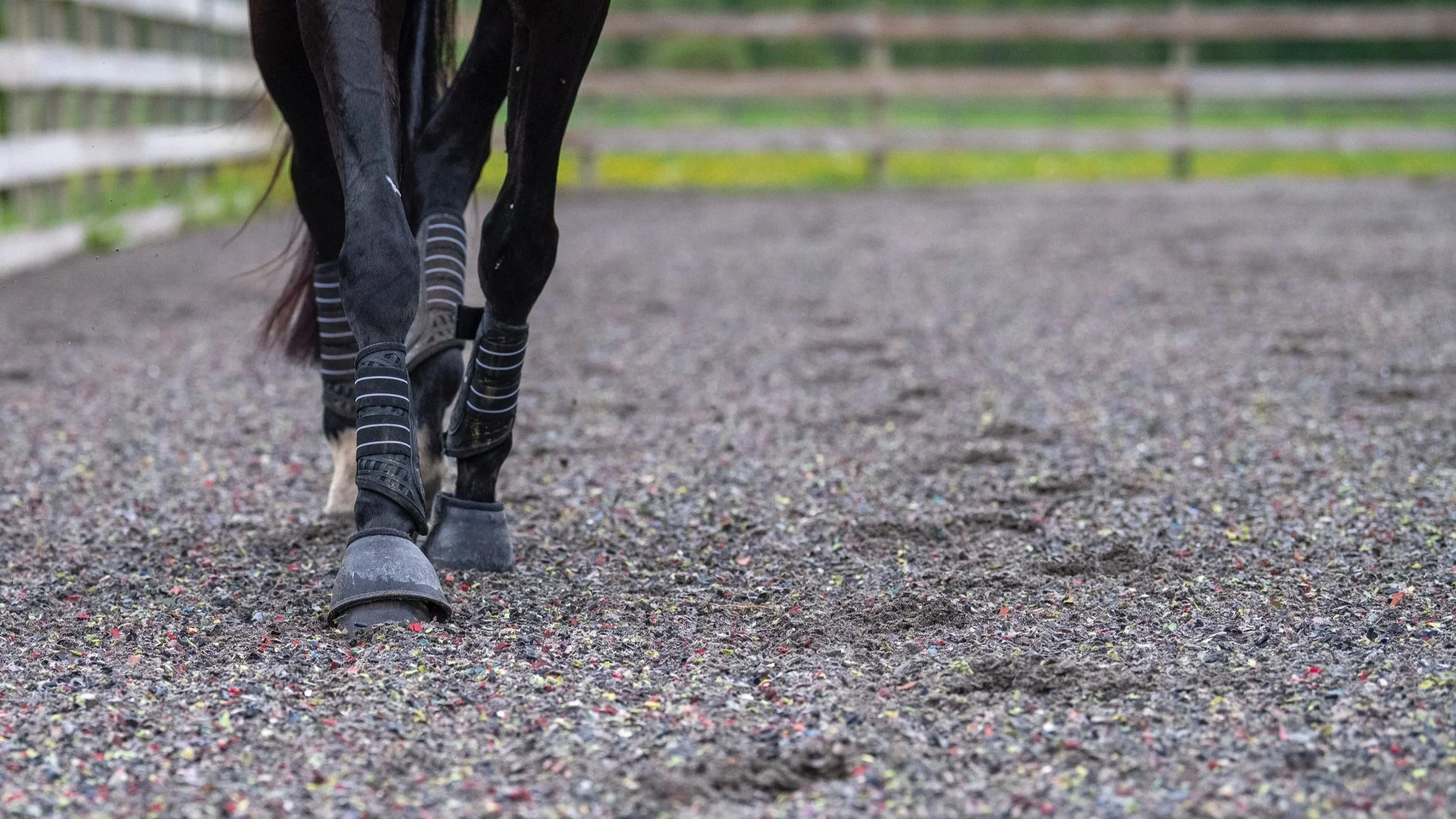
Arena Footing Additive for Horse Riding Arenas
An arena footing additive is a specialized material mixed into sand to improve cushioning, reduce concussion, manage moisture, and maintain consistent riding conditions. Arena footing additives play a vital role in protecting equine soundness, rider safety, and long‑term arena performance.
ReitenRight is a rubber arena footing additive designed to enhance these properties using natural open‑celled rubber technology.
What Does an Arena Footing Additive Do?
Arena footing additives modify how sand behaves under load by:
Creating elastic void space
Reducing hardness and compaction
Improving impact absorption
Stabilizing moisture levels
Extending the usable life of footing
Without an additive, sand alone tends to compact, dry out, or become unstable under repeated use.
Choosing the Right Arena Footing Additive
The best footing additive isn't necessarily the one with the most cushioning or the most stability.
The ideal footing system balances:
Stability: The footing should resist excessive displacement under turning and lateral movement.
Cushioning: The footing should absorb impact forces rather than transferring them directly to the horse's limbs.
Energy Return: Horses perform best when footing absorbs impact while still returning energy efficiently.
Moisture Management: Proper moisture retention helps reduce dust, improve consistency, and decrease watering requirements.
Longevity: A quality footing additive should continue performing for years rather than requiring frequent replacement.
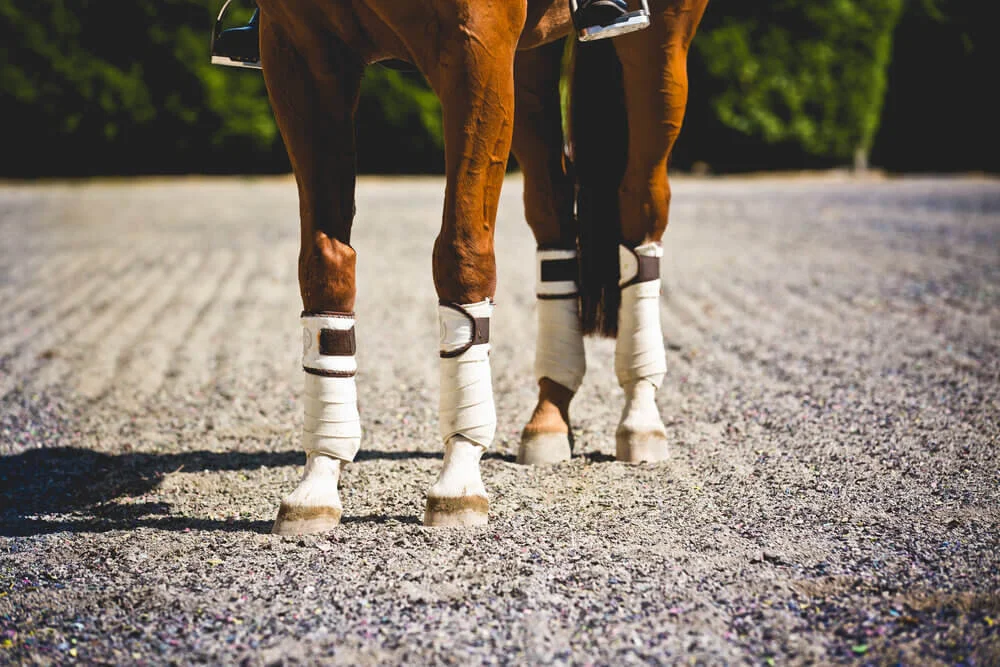
Types of Arena Footing Additives
Common arena footing additives include:
Rubber Additives
Fiber Blends
Textile & Synthetic Materials
Organic Materials
Each type affects cushioning, moisture, and durability differently. Rubber footing additives are often used where elastic rebound, dust reduction, and longevity are priorities.
Understanding the Different Types of Arena Footing Additives
Not all footing additives serve the same purpose. The ideal footing system depends on your discipline, climate, traffic volume, maintenance capabilities, and existing footing materials.
Fiber Arena Footing Additives
Fiber footing additives are commonly blended with sand to increase stability and reduce movement within the footing profile.
Common applications include:
Hunter/Jumper arenas
Dressage facilities
Competition venues
High-performance training centers
Benefits:
Increased strength and stability
Reduced footing displacement
More consistent support through turns and transitions
Improved traction
Long-Term Considerations of Fiber Footing
While fiber can add excellent stability, many fiber systems eventually experience:
Dryness during summer months
Requires consistent watering to perform
Typically requires a specialized harrow
Increased dust generation
Hardening when moisture levels decline
Increased irrigation requirements
Reduced cushioning as sand compacts over time
Many facility owners find that fiber provides great stability but requires additional moisture management and impact absorption solutions to maintain optimal performance year-round.
Why ReitenRight Works Well With Fiber Arenas
Rather than replacing fiber, ReitenRight can complement it.
Fiber helps create stability and structure within the footing. ReitenRight adds elastic cushioning and moisture retention that helps offset some common challenges associated with fiber-only systems.
Benefits include:
Improved moisture retention
Adds cushion to areas of compaction, working its way into packed footing
Reduced watering requirements
Additional concussion reduction
Enhanced comfort for horses in high-use arenas
More consistent footing depth and feel throughout seasonal weather changes
This combination often creates a footing profile that offers both stability and cushioning, two characteristics that are frequently difficult to achieve simultaneously.
Rubber Arena Footing Additives
Rubber additives are used to increase elasticity, cushioning, and impact absorption within the footing system.
Not all rubber footing products perform identically.
The type, density, shape, and structure of the rubber significantly influence performance.
Benefits may include:
Reduced concussion
Increased comfort for horses
Better energy return
Improved moisture retention
Less compaction
Long-Term Considerations of Traditional Rubber Footing
Some rubber footing products can develop challenges over time, including:
Compression and loss of resilience
Excessive surface flotation
Inconsistent particle breakdown
Heat retention in certain climates
Dust accumulation when paired with poor-quality sand
How ReitenRight Differs
ReitenRight's open-cell rubber structure compresses and rebounds differently than many traditional rubber crumb products. This allows the material to maintain cushioning characteristics while also helping retain moisture within the footing profile.
For more detail on the unique capabilities of ReitenRight visit our Blog Article: The ReitenRight Difference
Textile and Synthetic Arena Additives
Textile blends typically combine synthetic fibers, geotextiles, and shredded manufactured materials within sand.
These systems are often selected to enhance footing stability and reduce sand movement.
Benefits:
Strong footing structure
Consistent support
Reduced migration
Long-Term Considerations
Over time, textiles may:
Require more frequent moisture management
Accumulate dust
Separate unevenly if footing is poorly maintained
Lose effectiveness as fibers break down
Many arena owners supplement textile footing systems with moisture-retaining additives to improve longevity and rideability.
Organic Footing Additives
Some facilities use organic materials such as:
Wood fibers
Wood chips
Bark products
These materials can improve initial cushioning while providing an economical option.
Long-Term Considerations
Organic materials naturally decompose.
This can result in:
Footing settlement
Frequent top-ups
Changes in consistency
Drainage issues
Increased maintenance costs over time
For high-performance riding facilities, organic additives often require significantly more ongoing maintenance than synthetic or rubber alternatives.
How Arena Footing Additives Support Soundness
Poor footing increases stress on a horse’s musculoskeletal system. Properly selected arena footing additives help:
Reduce peak impact forces
Encourage natural movement mechanics
Lower fatigue accumulation
Support long‑term soundness and wellbeing
The Relationship Between Sand and Arena Footing Additives
Even the best arena footing additive cannot compensate for poor sand selection.
Arena performance is ultimately determined by the interaction between:
Base construction
Drainage system
Sand selection
Footing additive
Maintenance practices
In most arenas, sand represents 80-95% of the footing system's volume. The additive enhances the performance of the sand but does not replace the need for properly graded, angular footing sand.
This statement alone adds a tremendous amount of authority because knowledgeable arena builders immediately recognize it as true.
For more information on sand selection download our Sand Guide:
Commonly Asked Arena Footing Additive Questions
-
High‑quality natural rubber footing additives designed for equestrian use are considered safe and effective when properly installed.
-
High‑quality natural rubber footing additives designed for equestrian use are considered safe and effective when properly installed.
-
Yes. Many footing additives improve moisture retention, which helps reduce airborne dust and watering frequency.
-
Properly engineered rubber footing additives can perform well across a wide range of climates, including cold and dry environments.