
Angularity, Sphericity, and Equestrian Footing Performance
When evaluating arena footing, most riders and facility managers focus on visible factors like depth, moisture, or additives. However, one of the most critical factors in equestrian footing performance is often overlooked: the microscopic shape of arena sand particles.
Understanding how arena sand angularity and sphericity influence traction, stability, and consistency can help prevent common footing issues and improve both horse performance and soundness.
What Is Particle Shape in Arena Sand?
Not all arena sand is created equal. Even if two sands have the same particle size, their shape can differ significantly based on origin:
Natural sand (river or beach): smooth and rounded
Manufactured sand (crushed rock): sharp and angular
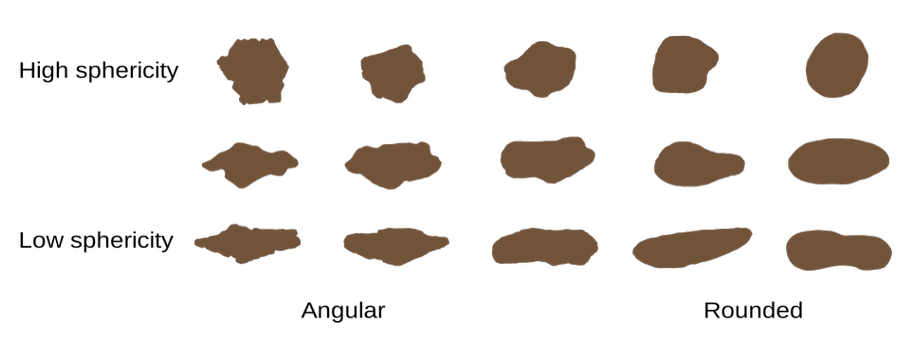
Two key characteristics define particle shape:
Angularity: how sharp or jagged each grain is
Sphericity: how round or spherical each grain appears
These properties determine how sand particles interact under a horse’s hoof, whether they lock together, shift, or roll.
Angularity: The Key to Grip and Traction
Angular sand particles play a major role in creating stable, high-performing arena footing.
Benefits of Angular Arena Sand
Increased traction and grip
Better stability during turns and jump landings
Higher shear strength, reducing slipping
This makes angular sand ideal for performance disciplines where secure footing is essential.
Common Footing Issues with Too Much Angularity
Excessively angular sand can create problems such as:
Increased stress on hooves and joints
Breakdown into fine particles, leading to hard footing
Best solution: Use sub-angular arena sand, which balances sharp edges with slight wear for optimal performance.
Sphericity: Controlling Movement and Stability
Sphericity affects how much sand particles move against each other.
High Sphericity (Rounded Sand)
Particles roll easily
Reduced friction
Creates loose, unstable footing
This type of arena footing leads to:
Increased slipping
Reduced push-off power
Lower rider confidence
Low to Moderate Sphericity
Particles interlock more effectively
Improved stability and consistency
Better energy transfer
Finding the Right Balance for Equestrian Footing
The best arena footing comes from a balanced combination of particle characteristics, not extremes.
Ideal Arena Sand Profile
For consistent, high-quality equestrian footing, aim for:
Moderate angularity for grip and traction
Low to moderate sphericity for stability
Uniform particle shape for consistency
Benefits of Proper Sand Selection
A well-balanced footing surface will:
Support horses during push-off and landing
Absorb impact without becoming too hard
Reduce long-term arena footing maintenance issues
Maintain consistent performance across disciplines
Why Arena Sand Matters for Horse Soundness
The quality of your arena footing directly affects horse health. Poor sand selection can lead to serious footing issues, including:
Slipping and instability → higher injury risk
Excessive grip → strain on joints and soft tissues
Inconsistent surfaces → uneven limb loading
Using properly balanced arena sand helps:
Improve biomechanics and movement efficiency
Reduce risk of lameness and injury
Increase horse and rider confidence
Common Arena Footing Problems Caused by Sand Shape
If your arena isn’t performing well, particle shape may be the issue:
Slippery footing → sand too round (high sphericity)
Hard or compacted surface → sand too angular
Inconsistent footing → mixed or uneven particle shapes
Dust and fines buildup → poor-quality sand breaking down
Start with the Right Arena Sand
While maintenance and additives are important, the foundation of every arena is its sand.
Choosing the right combination of angularity and sphericity will:
Improve traction and stability
Minimize common footing issues
Support long-term horse soundness
Extend the life of your arena surface
Ultimately, better arena sand leads to better equestrian footing, creating a safer, more consistent riding experience for both horse and rider.