
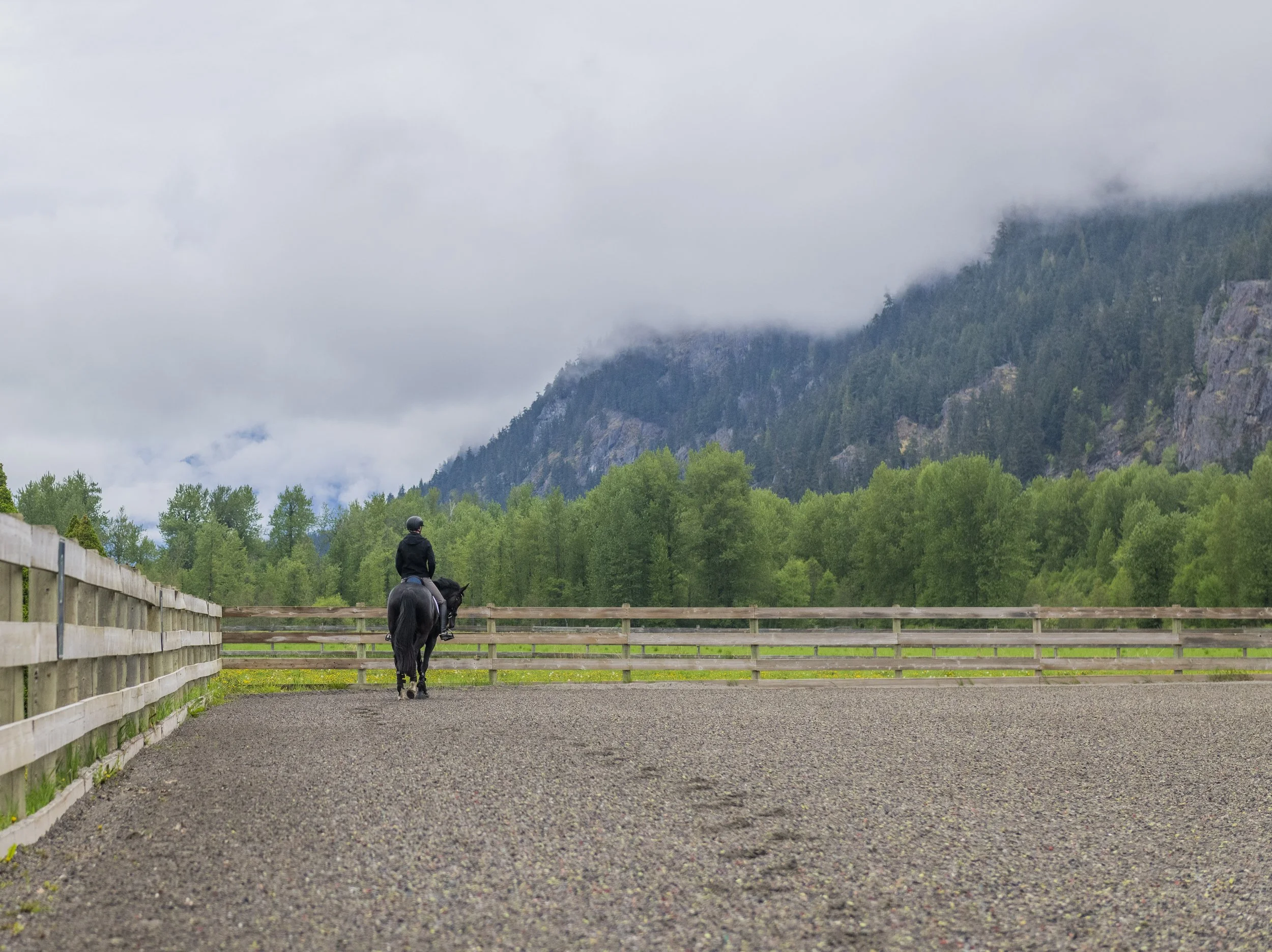
The outdoor arena dilemma
You can have the cushion and concussion relief of a rubber footing additive in an outdoor arena without watching it wash to the rail or float to the surface. The key is choosing a rubber that is built to stay blended with your sand.
Most facility owners who ride outdoors have heard the same warning: rubber doesn't belong outside. After one heavy rain, the story goes, you'll find a rubber crust floating on puddles, a berm piled along the fence, and bare sand where your horses need cushion most. That reputation is earned — for many rubber and foam additives.
ReitenRight is different by design. This article explains why typical additives migrate, and what makes ReitenRight's natural open-cell rubber stay blended in your sand, season after season.
Why most rubber and foam additives migrate
Migration happens when an additive is lighter than the sand around it and sheds water instead of holding it. In an outdoor arena, rain, wind, harrowing and thousands of hoof strikes keep sorting the footing. Whatever is lightest and driest works its way up and out.
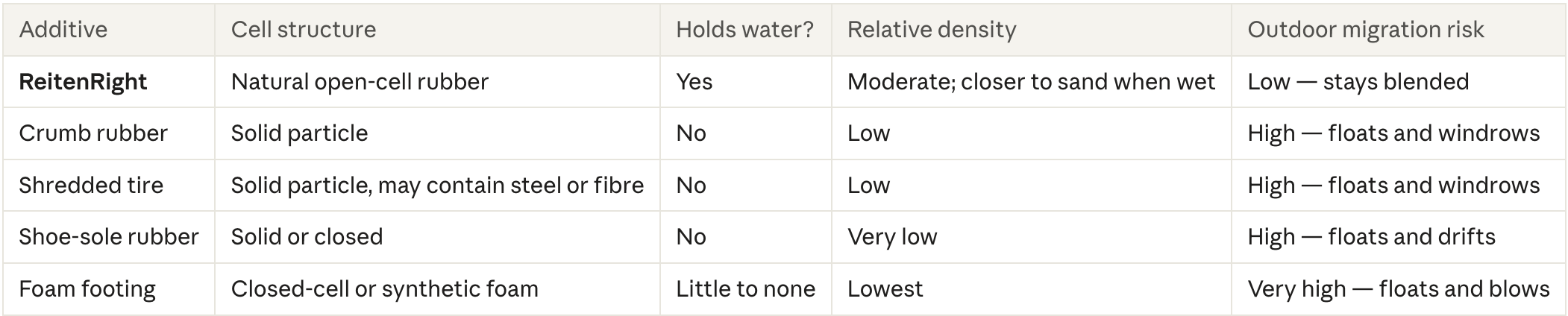
Crumb rubber and shredded tire. These solid, closed-surface particles don't absorb water. When the arena floods or puddles, they float. Hoof action pushes them toward the rail, and harrowing drags them into windrows. Tire products can also contain steel or fibre fragments and tend to heat up in the sun.
Shoe-sole rubber. Ground athletic-shoe material is light and springy, which feels great on day one. But the same lightness lets it rise through wet sand and drift with wind and water once the arena is exposed to weather.
Foam footing. Closed-cell and synthetic foams are extremely low in density — that's where their bounce comes from. Outdoors, that low density works against you: foam is usually the first thing to float, blow and separate from the sand.
The common thread: each of these behaves like a separate layer sitting in your sand, not part of it. Weather keeps pulling the two apart.
What makes ReitenRight different
ReitenRight is a natural open-cell rubber, and three characteristics work together to keep it in your sand.
Open-cell structure. Unlike solid crumb or closed-cell foam, ReitenRight's cells are open and interconnected. Sand fines lock into its irregular surface, so each piece grips the sand around it rather than sliding past it.
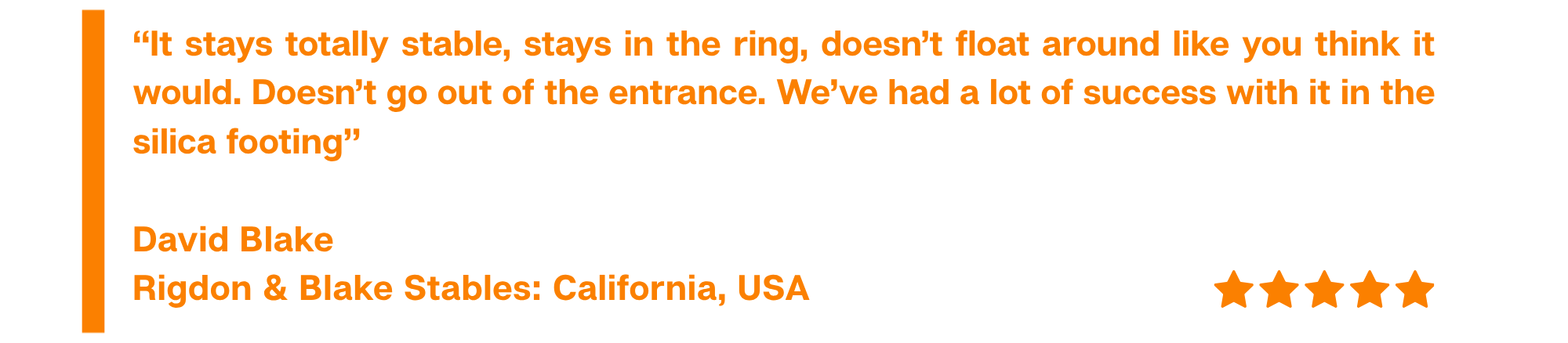
Water retention. Those open cells take on and hold moisture. A ReitenRight particle that has absorbed water doesn't float to the top when the arena gets wet — it stays down in the footing, moving with the sand.
Density. ReitenRight has more body than foam or shoe-sole rubber. With its added water weight, it sits much closer to the behaviour of sand, so harrowing and hoof traffic mix it rather than separate it.
The result is an additive that becomes part of the footing instead of a layer on top of it. Once blended, it's built to stay that way with routine harrowing.
How it stays blended outdoors
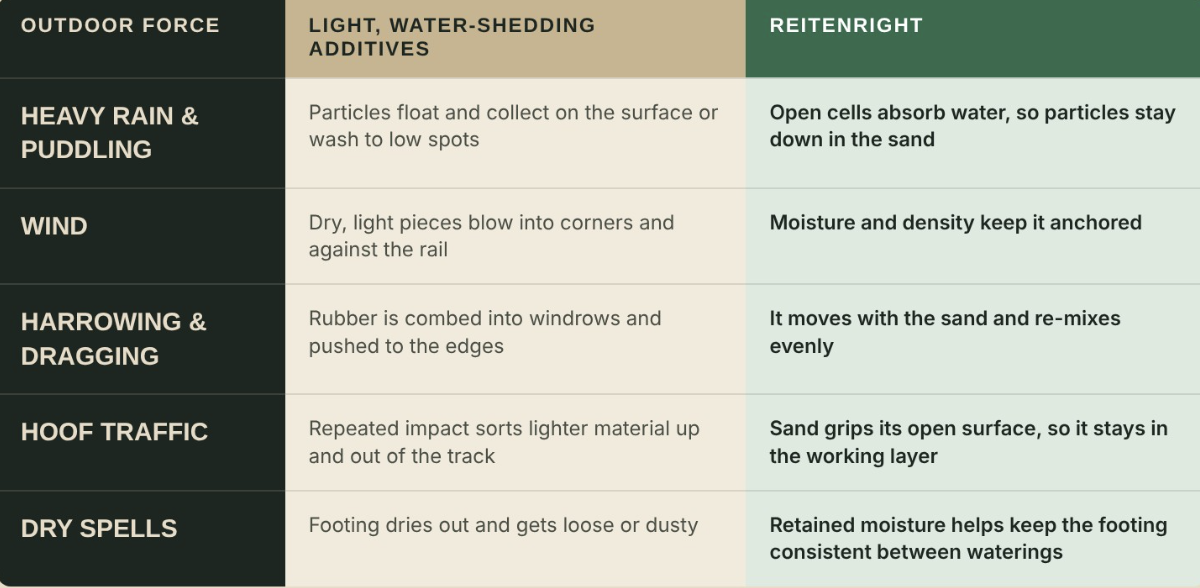
Every outdoor force that separates ordinary rubber from sand is one ReitenRight is built to resist.
ReitenRight vs. other additives at a glance
What it means for your horses and your facility
An additive that stays blended delivers its benefits across the whole arena, all season.
Soundness. Cushion stays in the track and on the circles where horses load their legs, not piled along the fence.
Consistent performance. Horses get the same grip and give from one end of the arena to the other, and from one week to the next.
Less maintenance. No raking rubber back off the rail, skimming floating debris after storms, or topping up material that washed away.
Better value. The additive you paid for stays in the footing doing its job, instead of being lost to weather.
A cleaner property. No rubber bits drifting into drainage, paddocks or neighbouring ground.
Getting the most from ReitenRight outdoors
A good outdoor result starts with the base and the blend.
Start with a sound, well-drained base. No additive can fix standing water caused by a failing base or poor grading.
Blend thoroughly at installation. Work ReitenRight evenly through the sand layer so every part of the arena gets the same mix.
Water before the first heavy use. Letting the open cells take on moisture early helps the rubber settle into the sand.
Harrow on a regular schedule. Routine dragging keeps the footing level and the blend uniform.
Talk to us about your sand. Sand type and arena use affect the right ratio. Our team can recommend an amount for your facility.
Rubber that belongs outside
If migration is the reason you've held off on a rubber additive for your outdoor arena, ReitenRight was made for that problem. It blends into your sand and holds up to rain, wind, harrowing and hard riding.
Ready to upgrade your outdoor footing? Get in Touch for a footing recommendation tailored to your arena.